
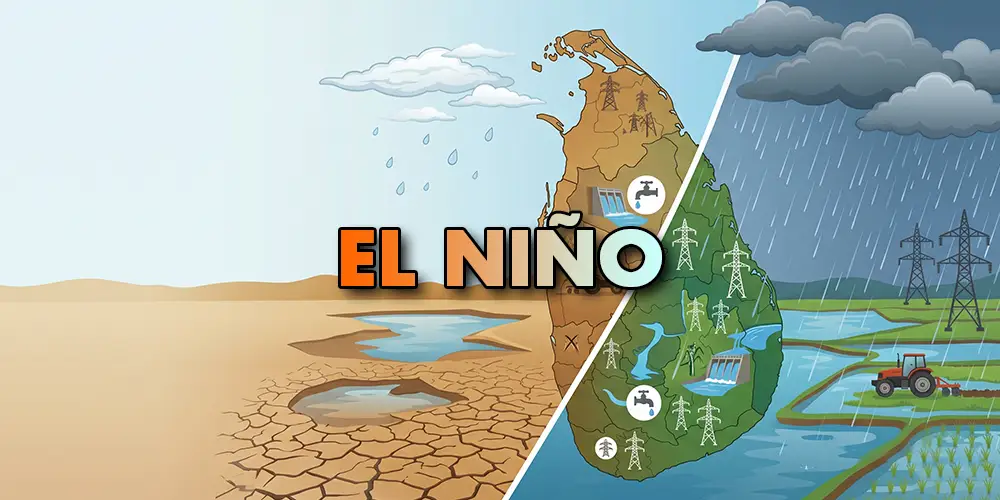
NOAA Forecasts High Probability of Very Strong El Niño in Late 2026
The National Oceanic and Atmospheric Administration (NOAA) has announced that there is an 81% probability of a very strong El Niño event developing during the October–December 2026 period. The forecast has drawn significant attention from meteorological agencies and climate-sensitive sectors worldwide, including Sri Lanka, due to the potential impacts on rainfall patterns, water resources, agriculture, and disaster risk management.
Current El Niño Status
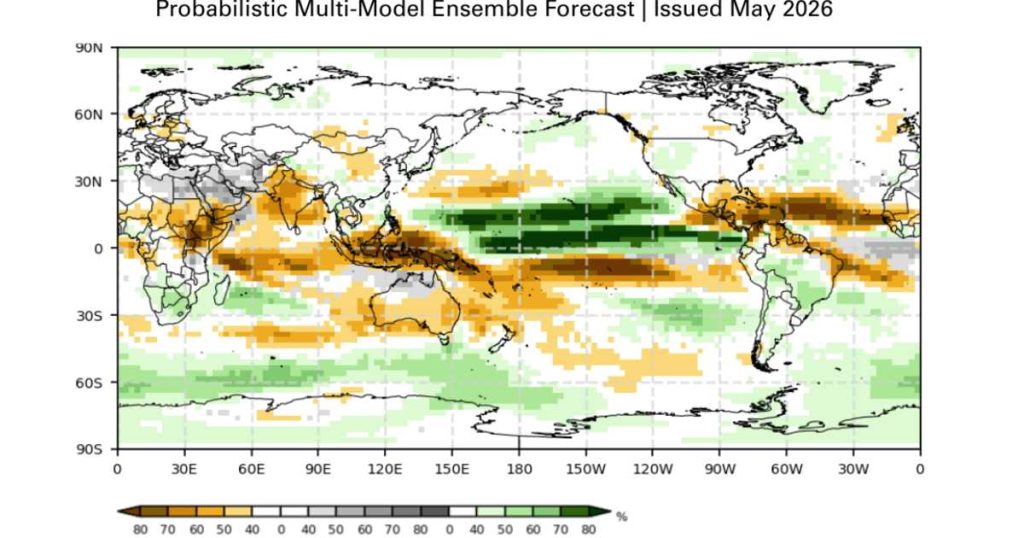
El Niño conditions have already emerged in the tropical Pacific Ocean and are currently classified as being at a weak intensity level. However, climate models indicate that ocean temperatures are likely to continue warming during the coming months.
Forecasts further suggest a 63% probability that El Niño will reach a very strong intensity during the November 2026 to January 2027 period. According to NOAA, there remains approximately a one-third chance that the event will stay below very strong intensity levels.
El Niño is a climate phenomenon that occurs when sea surface temperatures in the central and eastern equatorial Pacific Ocean become warmer than average. These temperature changes can alter atmospheric circulation patterns and influence weather conditions across many parts of the world.
Expected Climate Impacts in Sri Lanka
Based on analyses of previous El Niño events observed between 1950 and 2025, Sri Lanka may experience notable variations in rainfall during the second half of 2026.
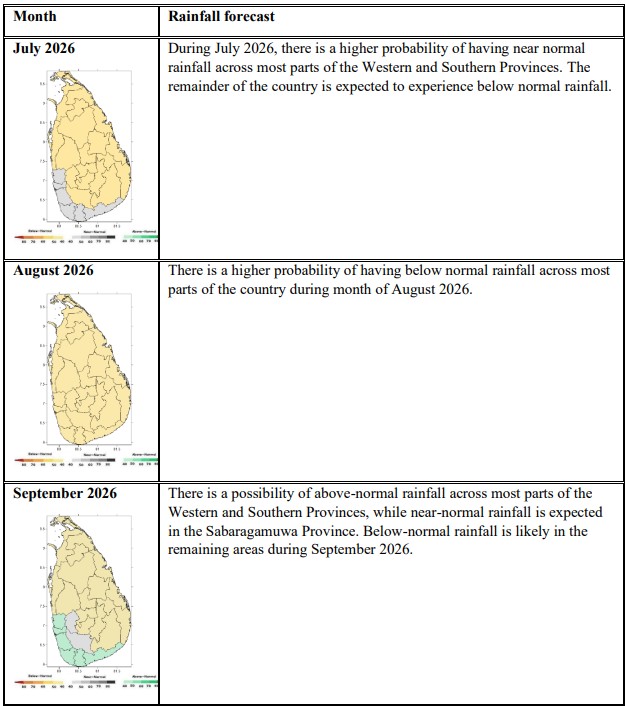
During July and August, rainfall is expected to be below normal, particularly across the country’s dry zone regions. Reduced rainfall during this period may place pressure on water resources, agriculture, and hydropower generation.
From October onwards, rainfall is generally expected to become above normal across many parts of the island. If a positive Indian Ocean Dipole (IOD) develops alongside El Niño conditions, enhanced rainfall may continue through December, increasing the possibility of flood and landslide events in vulnerable areas.
Sectors Requiring Close Attention
Several climate-sensitive sectors are advised to closely monitor the evolving situation and take appropriate preparedness measures.
Water resource managers may need to implement conservation and storage strategies during the anticipated dry conditions in July and August. Agricultural authorities and farmers are encouraged to consider seasonal forecasts when planning cultivation activities and irrigation requirements.
The expected increase in rainfall from October onwards may create challenges for disaster management agencies, particularly regarding flood preparedness, landslide monitoring, and emergency response planning.
Other sectors that could be affected include livestock, public health, energy generation, transportation, and infrastructure management.
Department of Meteorology Monitoring and Preparedness
The Department of Meteorology of Sri Lanka continues to closely monitor the developing El Niño situation and regularly issues weekly and monthly seasonal forecasts. The Department also conducts monthly analyses of rainfall data to monitor meteorological drought conditions and provide early warning information to decision-makers.
Updated climate forecasts and advisories are shared with relevant stakeholder organizations, including the Irrigation Department, Water Management Committee, Department of Agriculture, National Building Research Organisation (NBRO), Disaster Management Centre (DMC), Ministry of Health, Sri Lanka Land Development Corporation, and other institutions responsible for managing climate-related risks.
In addition, the Department provides technical support to the national committee established through a Cabinet decision to address climate-related impacts and strengthen preparedness efforts.
Monthly Rainfall Forecasts for July, August and September 2026
Importance of Following Official Forecasts
Meteorologists emphasize that long-range forecasts are subject to change because weather conditions are influenced by multiple atmospheric and oceanic factors. Atmospheric disturbances, low-pressure systems, tropical depressions, and intraseasonal climate patterns such as the Madden–Julian Oscillation (MJO) can significantly affect short-term weather conditions.
Therefore, while the current outlook indicates a high probability of a very strong El Niño event later in 2026, the public and relevant sectors are encouraged to pay close attention to official weather forecasts, advisories, and warnings issued by the Department of Meteorology.
As climate conditions continue to evolve, regular updates will provide the most accurate information for planning and preparedness across Sri Lanka.