
How It Forms and Why It Is Essential for Life
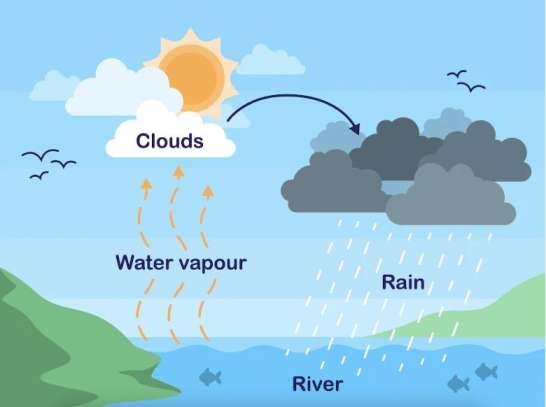
Rain is a form of liquid precipitation that occurs when water droplets in clouds become large and heavy enough to fall to Earth. It is one of the most important parts of the water cycle and provides freshwater that supports people, agriculture, ecosystems and many economic activities.
Rain begins inside clouds, where tiny water droplets gather around microscopic particles known as cloud condensation nuclei (CCN). These particles can include dust, salt, smoke and other atmospheric particles. As water droplets collide and combine, they gradually become larger and heavier. Eventually, gravity overcomes the forces keeping them suspended in the cloud, causing the droplets to fall as rain.
Rain is essential for human life because it replenishes rivers, lakes, reservoirs and groundwater. Communities depend on rainfall for drinking-water supplies, agriculture, sanitation, industry and hydroelectric power. In regions where surface water or groundwater is limited, collecting rainwater can provide an important source of freshwater.

How Pollution Can Affect Rain
Air pollution can influence the characteristics of rainfall. When pollutants such as sulfur dioxide and nitrogen oxides interact with water in the atmosphere, they can contribute to acid rain. Acid rain can affect soils, vegetation and aquatic ecosystems. These pollutants can originate from natural sources, including volcanic activity, as well as human activities such as burning fossil fuels.
Scientists have also investigated cloud seeding, a technique that introduces particles into clouds to encourage the formation of precipitation. Although it has potential applications, its effectiveness can vary depending on atmospheric conditions.
Interesting Facts About Raindrops
Raindrops do not actually have the classic teardrop shape often shown in illustrations. Very small droplets are approximately spherical. As droplets become larger, air resistance causes them to flatten and eventually develop more complex shapes. Large droplets can become unstable and break into smaller droplets.
Rain is generally defined as precipitation consisting of water drops at least about 0.5 millimetres in diameter, while smaller droplets are classified as drizzle. Some raindrops begin as ice crystals or snowflakes high in the atmosphere and melt as they descend into warmer air.
Rainfall varies dramatically around the world. Dry desert regions may receive very little rain each year, while tropical rainforests can receive several metres of rainfall annually. This variation makes rainfall one of the most important factors shaping Earth’s landscapes, ecosystems and human societies.
