
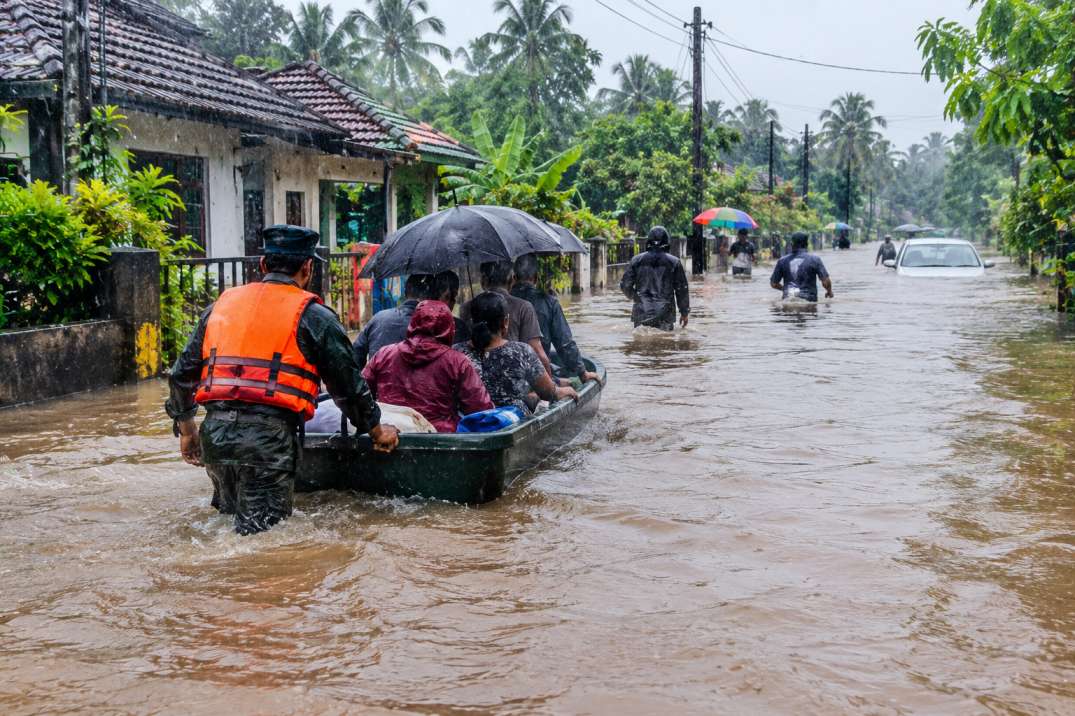
More than 10,500 people across 12 districts in Sri Lanka have been affected by adverse weather conditions, with one death, one injury and damage to hundreds of houses reported, according to the Disaster Management Centre (DMC).
The latest situation report, covering the period from October 23 to 6 p.m. on October 26, 2026, recorded 10,500 people from 2,736 families affected by the ongoing severe weather.
The report also confirmed that 215 houses had sustained partial damage, while two houses were completely destroyed. One person was injured as weather-related incidents continued to affect several parts of the country.
Puttalam Records the Highest Number of People Affected
Puttalam District reported the largest number of people affected, with 8,446 individuals from 2,166 families impacted by the adverse weather.
The district also recorded a fatal drowning incident involving a 56-year-old person in Madampe, according to the situation report.
Ratnapura was another significantly affected district, with 1,264 people from 315 families reported to have experienced the effects of the severe weather.
In Kalutara District, 218 people from 61 families were affected, highlighting the continuing impact of the unsettled weather across parts of western and southwestern Sri Lanka.
Families Moved to Safety Centres
As the situation developed, some residents were moved to safer locations.
According to the DMC, 182 people from 67 families were staying at four safety centres located in Colombo, Ratnapura and Mannar. A further 60 people from 12 families had sought shelter with relatives.
Authorities continue to monitor the situation and assess the needs of communities affected by the weather.
Fallen Trees Disrupt Homes and Road Traffic
Weather-related incidents were also reported in Kalutara District.
In Urugala East, Ingiriya, a tree fell onto a house, injuring the owner. The injured person was admitted to Horana Hospital for treatment, while the house sustained partial damage.
In a separate incident, a fallen tree blocked part of the Panadura–Ratnapura road near Nambapana, temporarily disrupting traffic. The obstruction was subsequently cleared.
These incidents highlight the risks posed by unstable trees and falling branches during periods of adverse weather, particularly when strong winds and heavy rainfall affect residential areas and transport routes.
Cyclone Arnab Strengthens Over the Bay of Bengal
Meanwhile, the Department of Meteorology reported that a deep depression over the east-central Bay of Bengal had intensified into Cyclonic Storm Arnab.
The storm was reported to be approximately 1,100 kilometres northeast of Kankesanthurai at 8:30 a.m. on October 25, according to the information provided in the weather report. It was moving northwestward, with a strong westward component.
A subsequent weather bulletin issued at 4 p.m. on October 26 indicated that the system was expected to strengthen further into a severe cyclonic storm over the west-central Bay of Bengal.
The storm’s development is being closely monitored as meteorologists assess its movement and potential effects on surrounding regions.
Will Cyclone Arnab Affect Sri Lanka?
The reported cyclone development is an important regional weather development for Sri Lanka to monitor. However, the information provided does not establish that Cyclone Arnab will directly cross Sri Lanka or cause specific impacts on the island.
Local weather conditions may vary considerably between districts. Residents should therefore rely on the latest forecasts and warnings issued by Sri Lanka’s Department of Meteorology rather than assuming that the cyclone’s projected path will directly affect their area.
People living in areas prone to flooding, falling trees and other weather-related hazards should remain alert and follow instructions from local authorities.
Authorities Continue to Monitor the Situation
With thousands of people already affected and damage reported to homes and infrastructure, the ongoing weather situation remains a concern for several districts.
Residents are advised to monitor official weather updates, avoid flooded roads and waterways, and keep away from unstable trees and damaged structures.
Further updates from the Disaster Management Centre and the Department of Meteorology will be important in determining how the situation develops in the coming days.
Source: Disaster Management Centre situation report and Department of Meteorology cyclone advisory, as described in the supplied information.
This article reflects the reported situation as of October 26, 2026. Figures and forecasts may be revised as authorities release further updates.