
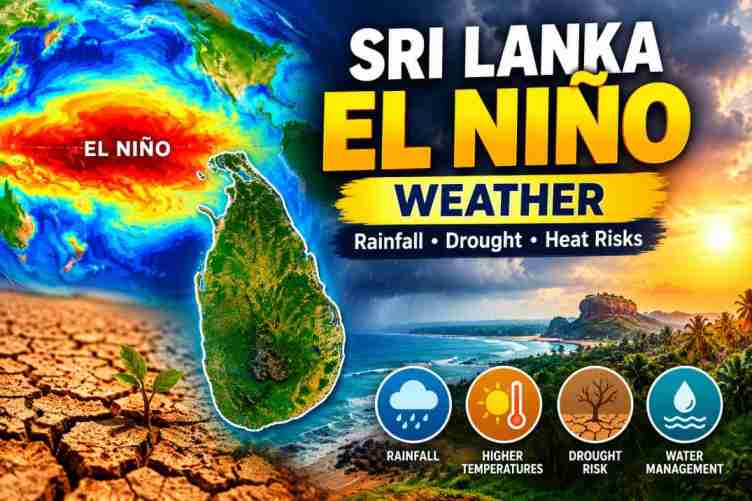
Sri Lanka is preparing for possible weather-related challenges as a strong El Niño event develops, with climate experts warning that the phenomenon could influence rainfall and temperature patterns across the region.
According to the World Meteorological Organization (WMO), El Niño is expected to strengthen during the latter part of 2026, with its effects potentially continuing into early 2027. The Sri Lanka Department of Meteorology has also highlighted the possibility of a very strong El Niño during October to December 2026, based on international climate forecasts.

How Could El Niño Affect Sri Lanka?
El Niño is a natural climate phenomenon associated with warmer-than-average sea surface temperatures in the central and eastern tropical Pacific Ocean. It can alter atmospheric circulation and influence weather patterns in different parts of the world.
For Sri Lanka, its effects may include changes in seasonal rainfall, higher temperatures and increased pressure on water resources. However, the actual impact depends on the strength and timing of the event, as well as other climate factors, including the Indian Ocean Dipole.
Climate outlooks for October to December 2026 indicate that rainfall conditions may vary across South Asia. Therefore, Sri Lanka should not assume that every district will experience the same weather conditions or that drought is inevitable.

Rainfall and Drought Concerns
Changes in rainfall are among the main concerns associated with El Niño. Extended dry periods could affect agriculture, drinking-water supplies and reservoir levels, particularly in areas that depend heavily on seasonal rainfall.
At the same time, El Niño does not mean that the entire country will remain dry. Some areas may still experience heavy rain, thunderstorms and flooding, depending on regional weather systems and other climate influences.
Farmers and agricultural authorities are encouraged to monitor official seasonal forecasts before making decisions about cultivation, irrigation and water management.

Rising Temperatures and Water Management
Higher temperatures are another concern during a strong El Niño event. Hotter conditions can increase evaporation and place additional demand on water supplies, especially if rainfall becomes irregular.
Authorities and communities can reduce potential risks by conserving water, monitoring reservoir levels and following guidance from meteorological and irrigation officials.
Public Advised to Follow Official Weather Updates
Although El Niño can influence Sri Lanka’s climate, it cannot determine the weather on a particular day or guarantee a specific disaster. Residents should rely on updates from the Sri Lanka Department of Meteorology and relevant government agencies rather than unverified social media claims.
With El Niño conditions expected to remain influential into 2027, continued monitoring and early preparation will be important for managing possible impacts on agriculture, water resources and daily life.

How Sri Lanka Can Prepare for El Niño Weather Risks in 2026–2027
As Sri Lanka monitors the possibility of a strong El Niño event, the priority should be to strengthen preparedness before weather-related problems become serious. Effective planning will require cooperation between government agencies, farmers, water managers, energy authorities and local communities.
Early Warning Systems Become Increasingly Important
Accurate and timely weather information will be essential throughout the coming months. Seasonal climate forecasts can indicate broad trends, but they cannot reliably predict every local rainfall event, flood or dry spell several months in advance.
The Department of Meteorology should remain the primary source of official weather forecasts and warnings. Residents should also follow announcements from the Disaster Management Centre and local authorities, particularly when heavy rain, strong winds, landslides or flooding are expected.
Improved communication can help communities respond quickly to changing conditions. Farmers, in particular, need access to updated rainfall forecasts to make informed decisions about planting dates, irrigation and harvesting.
Farmers Need Flexible Cultivation Plans
Agricultural planning should account for the possibility of changing rainfall patterns rather than relying entirely on historical seasonal expectations. Farmers can reduce their exposure to weather-related losses by selecting suitable crop varieties, improving soil moisture conservation and maintaining efficient irrigation systems.
Where water supplies are limited, careful scheduling can help prevent unnecessary losses. Agricultural officials should also provide region-specific advice on cultivation calendars and crop selection, based on current forecasts and local water availability.
Meanwhile, farmers in areas expecting heavy rainfall should pay attention to drainage, soil erosion and crop protection. Preparing for both dry and wet conditions can reduce the risk of widespread agricultural disruption.

Protecting Reservoirs and Electricity Supplies
Water management will be another important part of Sri Lanka’s preparation. Reservoir operators must balance drinking-water requirements, irrigation needs and hydropower generation while considering changing inflows.
Regular assessments of reservoir storage and projected water demand can support better decisions during periods of limited rainfall. Energy planners can also prepare for potential reductions in hydropower generation by managing electricity demand and ensuring alternative generation capacity is available when needed.
If rainfall later improves, water managers will need to capture available supplies safely without overlooking flood-control requirements.
Communities Can Take Practical Steps
Households can prepare by avoiding unnecessary water use, checking water-storage arrangements and staying informed about official weather warnings. In flood-prone locations, families should know evacuation routes and keep essential documents, medicines and emergency supplies accessible.
Residents in landslide-prone areas should watch for official warnings and signs of ground instability during prolonged or intense rainfall. During periods of extreme heat, reducing strenuous outdoor activity during the hottest hours and maintaining adequate hydration can help protect health.

Why Monitoring Must Continue Into 2027
El Niño is only one factor influencing Sri Lanka’s climate. Indian Ocean conditions, the position of weather systems and the behaviour of the monsoons can all change the eventual outcome. Consequently, early expectations should be revised as new observations and forecasts become available.
The most effective strategy is to prepare for a range of possibilities rather than assume that one specific weather pattern is inevitable. Regular forecast updates, responsible water use, flexible agricultural planning and coordinated disaster preparedness can help Sri Lanka manage the potential challenges of 2026–2027.
Ultimately, early preparation will be more valuable than reacting after a drought, flood or prolonged heat event has already caused significant damage.